 All Itineraries
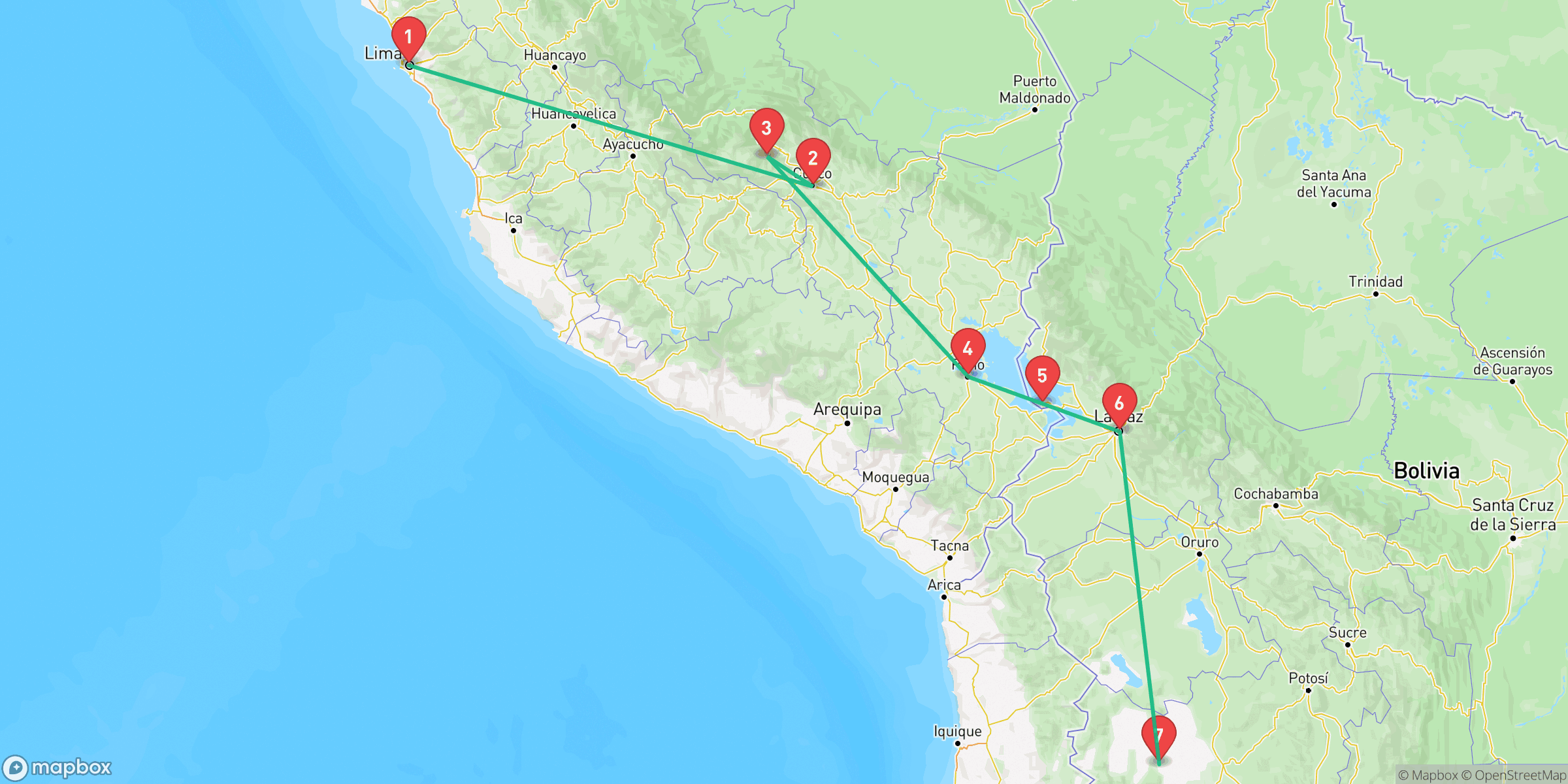
Peru & Bolivia in 3 Weeks: Inca Trail to Salt Flats
Lima to Uyuni — ancient ruins, high-altitude lakes, and the world's largest mirror
This 21-day South America itinerary traces the spine of the Andes from Peru's Pacific coast to Bolivia's altiplano: two days in Lima's colonial and gastronomic heart, four days in Cusco and the Sacred Valley acclimatizing and exploring Inca ruins, five days trekking the classic Inca Trail or Salkantay route to Machu Picchu, two days on Lake Titicaca's floating Uros islands and remote Taquile, two days crossing into Bolivia to Copacabana and Isla del Sol, two days in La Paz including the Death Road mountain bike descent, and a climactic three-day salt flat tour across the surreal Uyuni basin ending at the Chilean border.
At a glance
- Duration
- 3 weeks
- Stops
- 7
- Daily budget
- EUR 35–65
- Total estimate
- EUR 735–1,365
- Best months
- May, Jun, Jul, Aug, Sep
- Difficulty
- challenging
Estimates include lodging, food, local transport. Excludes flights.
Cover this trip
Nomad-style travel insurance from SafetyWing — medical, evacuation, lost luggage. From ~$45/month.
Customize this trip
Adjust dates, swap destinations, get an AI day-by-day plan with restaurants and activities.
Free to start, no card required
Stops on this route
Lima
Peru
- Miraflores cliffside boardwalk & paragliding
- Larco Museum pre-Inca gold collection
- Surquillo Market & ceviche at La Mar
Cusco & Sacred Valley
Peru
- Pisac ruins & Sunday market
- Ollantaytambo Inca fortress
- San Pedro Market & Plaza de Armas
Machu Picchu
Peru
- Classic Inca Trail or Salkantay Trek
- Sun Gate (Inti Punku) sunrise view
- Aguas Calientes hot springs after the trek
Puno & Lake Titicaca
Peru
- Uros floating reed islands
- Taquile island weaving community
- Sillustani funerary towers at sunset
Copacabana & Isla del Sol
Bolivia
- Isla del Sol north-to-south trek
- Tiwanaku pre-Inca ruins day trip
- Basilica of Our Lady of Copacabana
La Paz
Bolivia
- Witches' Market (Mercado de las Brujas)
- Death Road downhill mountain bike descent
- Mi Teleférico cable car cityscape views
Uyuni Salt Flats
Bolivia
- Salar de Uyuni sunrise & reflection season
- Flamingo-studded Eduardo Avaroa reserve lagoons
- Train Cemetery & salt hotel near Colchani
Day by Day
- 1
Lima
- Day 1
Arrive in Lima — Miraflores & First Ceviche
TransitFly into Jorge Chávez International Airport and take a taxi or Uber (around $12-15 USD) to the upscale Miraflores district. Walk the Malecón Cisneros clifftop boardwalk above the Pacific for sunset, then ease into Peruvian cuisine with a classic ceviche and leche de tigre at one of Miraflores' many cevicherías — La Lucha for a casual sandwich or Central if budget allows for the world-class tasting menu. Lima sits at sea level so you can eat and drink freely before heading to altitude.
- Day 2
Larco Museum, Barranco & Lima's Food Scene
Spend the morning at Museo Larco in Pueblo Libre (admission ~$15 USD), whose vaults hold thousands of pre-Inca gold and ceramic artifacts including an explicit erotic collection — give yourself 2 hours. Walk the colorful bohemian district of Barranco in the afternoon, crossing the Bridge of Sighs and browsing gallery-filled streets. For dinner, try Surquillo Market or the causas, tiradito, and pisco sours at one of the neighbourhood trattorias before your flight to Cusco tomorrow.
- 2
Cusco & Sacred Valley
- Day 3
Fly to Cusco — Acclimatization Day (3,400 m)
TransitTake a morning LAN or LATAM flight from Lima to Cusco (1 hour 20 minutes). Altitude sickness is a real risk at 3,400 m — take it slow, drink plenty of water, and sip coca tea offered by nearly every guesthouse. Check into a hostel in San Blas or near Plaza de Armas and spend the afternoon walking gently: the 12-angled stone in Hatunrumiyoc, Qorikancha sun temple, and the cathedral on the plaza. Avoid alcohol on day one.
- Day 4
Sacred Valley — Pisac Ruins & Sunday Market
Join a shared minivan tour from Cusco to the Sacred Valley (around 30 soles). Hike up to the Pisac terraced citadel early before midday heat and tour groups arrive — the agricultural terraces and cliff-carved tombs are some of the finest Inca stonework outside Machu Picchu. On Sundays the artisan market below fills with weavers and vendors selling alpaca textiles. Continue along the valley to Ollantaytambo for lunch and an afternoon walk around the village's ancient Inca water channels.
- Day 5
Ollantaytambo Fortress & Train to Aguas Calientes
TransitExplore Ollantaytambo's massive fortress at sunrise — the huge pink granite blocks of the Temple of the Sun were being assembled when the Spanish arrived in 1536, and you can still see the unfinished sections. Take the afternoon Peru Rail Expedition or Vistadome train from Ollantaytambo to Aguas Calientes (1.5 hours, $50-90 USD depending on class). The valley narrows dramatically into lush cloud forest as you descend. Check into a guesthouse in Aguas Calientes, have a quiet dinner, and prepare your gear for tomorrow.
- 3
Machu Picchu
- Day 6
Machu Picchu — The Lost City of the Incas
Take the first bus up from Aguas Calientes at 5:30 AM ($12 USD round trip) or hike the 90-minute Sun Gate trail to arrive at dawn for the most dramatic light and thinnest crowds. Pre-book your timed entry ticket online (mandatory, around $45 USD) — Circuit 1 covers the classic panoramic terrace viewpoint, the Temple of the Sun, and the Intihuatana stone. Arrive back in Aguas Calientes by early afternoon, soak your legs in the geothermal hot spring pools on the edge of town, and rest for the multi-day trek starting tomorrow.
- Day 7
Inca Trail Day 1 — Km 82 to Llactapata (or Salkantay Day 1)
Classic Inca Trail: transfer to Km 82 trailhead for a 12 km first day through the Urubamba valley past the Llactapata ruins (2,700 m) to camp at Wayllabamba — a manageable warm-up day. Salkantay alternative (increasingly popular, no permit lottery required): drive to Mollepata and hike toward Soraypampa base camp beneath the glaciated Salkantay peak (6,271 m). Both options include porter or mule support if booked through a licensed agency (~$600-900 USD for 4-day guided trek including all meals).
- Day 8
Trek Day 2 — Dead Woman's Pass (4,215 m)
The hardest day on the Inca Trail: a 7-hour climb to Abra de Warmihuañusca (Dead Woman's Pass) at 4,215 m — the highest point of the route — before a steep descent to Pacaymayu camp. Start early with headlamps, dress in layers, and accept that the altitude will slow you to a crawl near the top. The reward is sweeping views over cloud forest valleys and a ring of snowcapped peaks. Salkantay trekkers cross a similar high pass at 4,650 m beneath the glacier before dropping to the warm Apurímac valley.
- Day 9
Trek Day 3 — Cloud Forest, Orchids & Inca Ruins
A longer but gentler day: pass two more Andean passes and descend into humid cloud forest thick with orchids, hummingbirds, and bromeliads. Visit the well-preserved ruins of Runkurakay, Sayaqmarka, and Phuyupatamarka along the trail — site guides explain their function as Inca way-stations and astronomical observation points. Camp at Wiñay Wayna (3,700 m) with time to explore the magnificent terraced ruins and the nearby hot shower station, a trekkers' luxury.
- Day 10
Trek Day 4 — Sun Gate Sunrise & Machu Picchu
TransitWake at 3:30 AM and hike the final 2 km to Inti Punku (Sun Gate, 2,745 m) to watch first light break over Machu Picchu far below — one of the great moments in adventure travel. Descend to the citadel and explore for the rest of the morning with your guide, who will unlock the history of the Temple of the Three Windows, the Royal Tomb, and the Inca road network. Take the afternoon bus down to Aguas Calientes and the evening train back to Ollantaytambo, then transfer to Cusco.
- 4
Puno & Lake Titicaca
- Day 11
Bus to Puno — Uros Floating Reed Islands
TransitTake the Tourist Bus (Turismo Mer or Peru Hop) from Cusco to Puno along the altiplano — a 7-hour journey with stops at Andahuaylillas church, La Raya pass, and Pucara ruins en route. Arrive in Puno (3,830 m) in the afternoon and board an afternoon boat to the Uros islands: artificial floating platforms made entirely of totora reeds, inhabited continuously for centuries. The Uros people demonstrate reed boat construction and reed-layer island maintenance — the islands flex underfoot.
- Day 12
Taquile Island & Amantaní Homestay
Take an early morning boat (2.5 hours) to Taquile island, where the community has maintained a unique social structure and textile tradition — Taquile men knit while walking and the island has no hotels or cars. Hike to the hilltop main plaza at 3,950 m for views across the cobalt-blue lake to the Bolivian shore. Return to Puno via Amantaní island if time allows, stopping to see the Temple of Pachamama. Sillustani funerary chullpa towers at sunset make a superb optional add-on (30 km from Puno, shared taxi around 30 soles).
- 5
Copacabana & Isla del Sol
- Day 13
Border Crossing to Bolivia — Copacabana
TransitTake a shared minibus from Puno to the Peruvian border at Desaguadero or the more scenic Yunguyo crossing (4 hours, ~15 soles). Process immigration on both sides and continue to Copacabana on the Bolivian shore of Lake Titicaca (visa on arrival for most nationalities, $30-60 USD depending on your passport). The whitewashed Basilica of Our Lady of Copacabana draws pilgrims from across Bolivia. Book a morning boat to Isla del Sol (30 minutes) and arrange an overnight stay in a basic guesthouse for sunrise on the island.
- Day 14
Isla del Sol Trek — Inca Staircase & Sacred Rock
TransitHike the north-to-south trail across Isla del Sol (17 km, 4-5 hours) passing the Inca staircase Fuente del Inca, the Sacred Rock where Inca creation myths say the first Inca emerged from the lake, and Pilkokaina temple ruins. The path crosses a narrow isthmus and climbs to 4,100 m with views over a lake so large it resembles an inland sea. Take the afternoon boat back to Copacabana, then a bus to La Paz (3.5 hours — the bus boards a large raft to cross the Strait of Tiquina).
- 6
La Paz
- Day 15
Arrive La Paz — Witches' Market & Mi Teleférico
Arrive in La Paz (3,650 m — the world's highest administrative capital) and recover with a slow morning. Walk the Witches' Market (Mercado de las Brujas) on Calle Linares, where stalls sell llama fetuses, dried frogs, herbs, and amulets used in Andean spiritual rituals — vendors explain the uses with good humor. Ride the Mi Teleférico cable car network across multiple lines for sweeping aerial views over the bowl-shaped canyon city and surrounding Altiplano — the whole 10-line network costs about $1.50 USD per trip.
- Day 16
Death Road Downhill Mountain Bike (64 km)
TransitThe Yungas Road — nicknamed the World's Most Dangerous Road — descends 3,500 m in 64 km from La Cumbre pass (4,700 m) through cloud forest to Coroico (1,200 m). Guided downhill bike tours depart La Paz daily at 7 AM (around $35-50 USD including bike, helmet, and lunch) and require no prior mountain biking experience for the unpaved sections. The vertical drop, jungle scenery, waterfalls, and adrenaline rush make this one of Bolivia's unmissable experiences. Return to La Paz by late afternoon and buy your bus ticket to Uyuni.
- 7
Uyuni Salt Flats
- Day 17
Night Bus to Uyuni — Train Cemetery
TransitTake the overnight bus from La Paz to Uyuni (10-12 hours, ~100-180 bolivianos). Arrive early morning, check into a guesthouse, and recover with breakfast. After resting, visit the Train Cemetery (Cementerio de Trenes) on the edge of town — rusting 19th-century steam locomotives abandoned in the desert when the railway industry collapsed, now covered in grafitti and slowly dissolving into the salt air. Book a 3-day 4WD jeep tour departing the following morning through one of the many agencies on Avenida Arce.
- Day 18
Salar de Uyuni — Salt Desert & Perspective Photos
Your 4WD jeep heads onto the Salar de Uyuni — at 10,582 km² the world's largest salt flat, sitting at 3,650 m — passing through Colchani village where salt is processed. Stop at the Incahuasi cactus island (Isla Incahuasi) rising from the white expanse for panoramic views across the flat, then drive to the center of the salar for classic forced-perspective photos using miniature dinosaurs or a rubber duck. In rain season (Jan-Mar) a thin water layer creates a perfect reflection of the sky; in dry season (May-Oct) cracked hexagonal patterns stretch to the horizon. Night in a salt hotel near Colchani.
- Day 19
Eduardo Avaroa Reserve — Colored Lagoons & Flamingos
The second day of the jeep tour heads south through the Eduardo Avaroa Andean Fauna National Reserve (4,500-5,000 m altitude — the highest point of the whole trip). Jade-green Laguna Verde and crimson-red Laguna Colorada are stained by mineral sediments and host thousands of flamingos feeding on algae in the freezing salt water. Pass rock formations sculpted by wind erosion, geothermal Sol de Mañana geyser field bubbling at 4,800 m, and hot springs at Aguas Termales Polques — bring your swimsuit for the 37°C pools in sub-zero morning air.
- Day 20
Return Across the Salar — Sunset & Stargazing
TransitThe third jeep tour day returns north across the altiplano with additional stops: the Valley of Rocks (Valle de Rocas), more painted lagoons, and llama-dotted grasslands. Arrive back at the salar edge in time for a golden-hour sunset — the salt flat's flat white surface amplifies the oranges and reds of the sky in every direction with no horizon break. Uyuni's altitude and lack of light pollution make it one of the best stargazing spots on Earth — the Milky Way is visible to the naked eye on clear moonless nights. Transfer to Uyuni town.
- Day 21
Depart — Fly from Uyuni or Continue to San Pedro de Atacama
TransitBoA and Amaszonas operate small-plane flights from Uyuni Airport (UYU) to La Paz or Santa Cruz (1-1.5 hours) connecting to international departures. Alternatively, arrange a private jeep transfer via the Eduardo Avaroa reserve to the Chilean border at Hito Cajón, crossing into San Pedro de Atacama (5-6 hours, around $80-100 USD per person) for continuation into Chile — the Atacama Desert's geysers and moonscapes make a natural extension. Check your visa requirements for Chile well in advance.
Related Itineraries
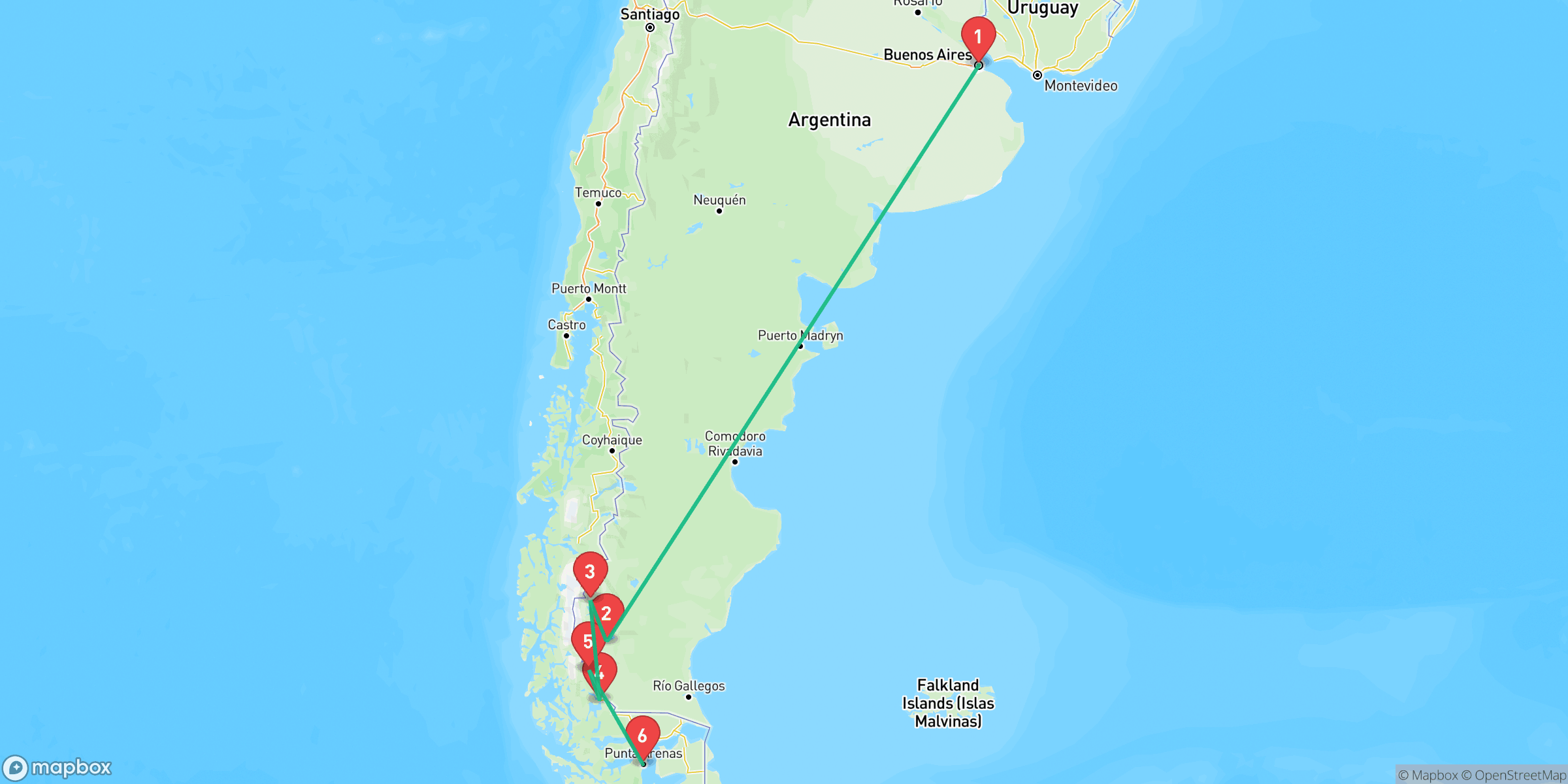
Patagonia in 2 Weeks: Argentine & Chilean Wilderness
Buenos Aires to Punta Arenas — glaciers, granite towers, and the end of the world
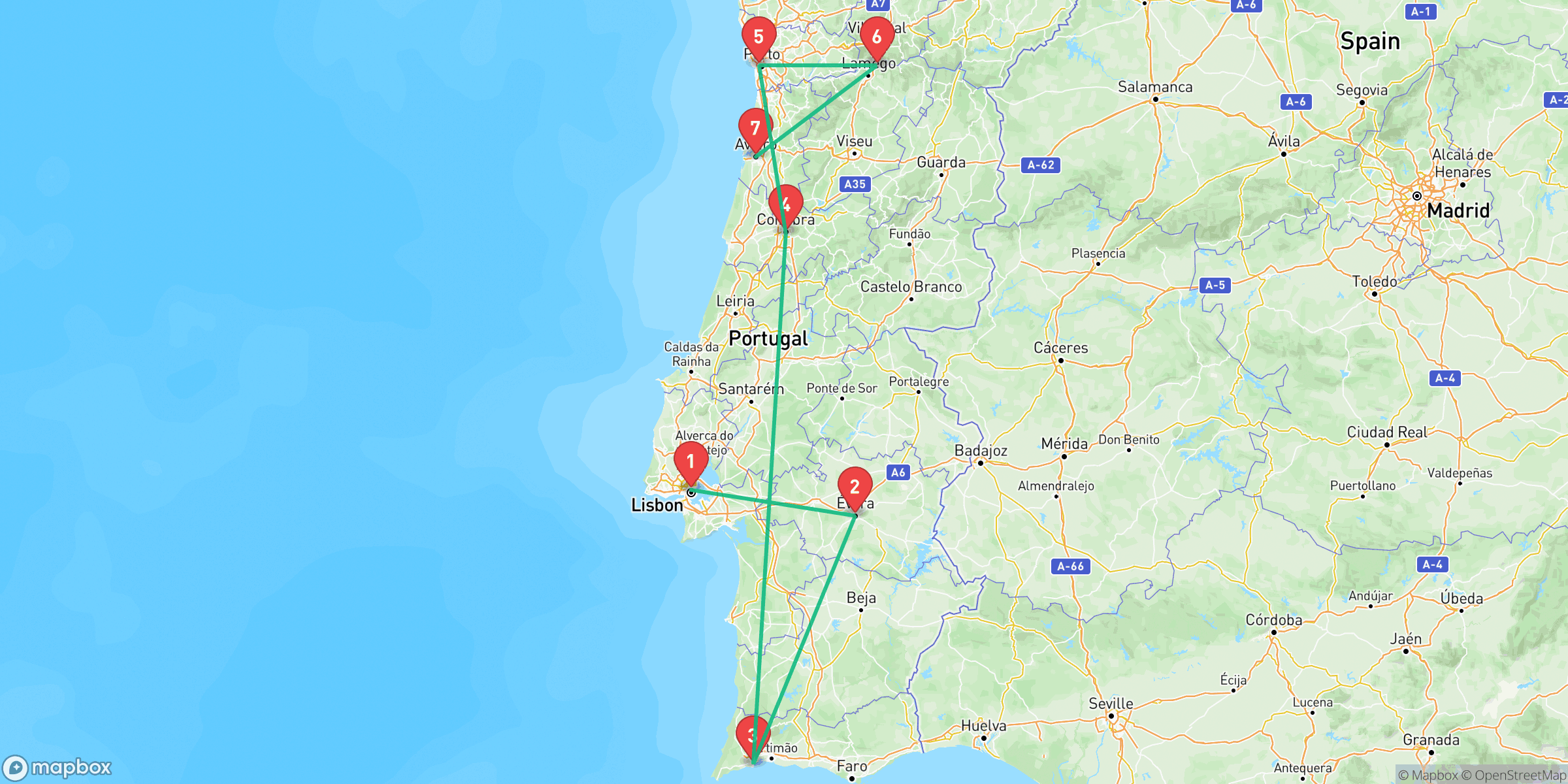
Portugal in 2 Weeks: Lisbon, Porto & the Algarve
Pastéis de nata, Atlantic cliffs, and port wine by the glass
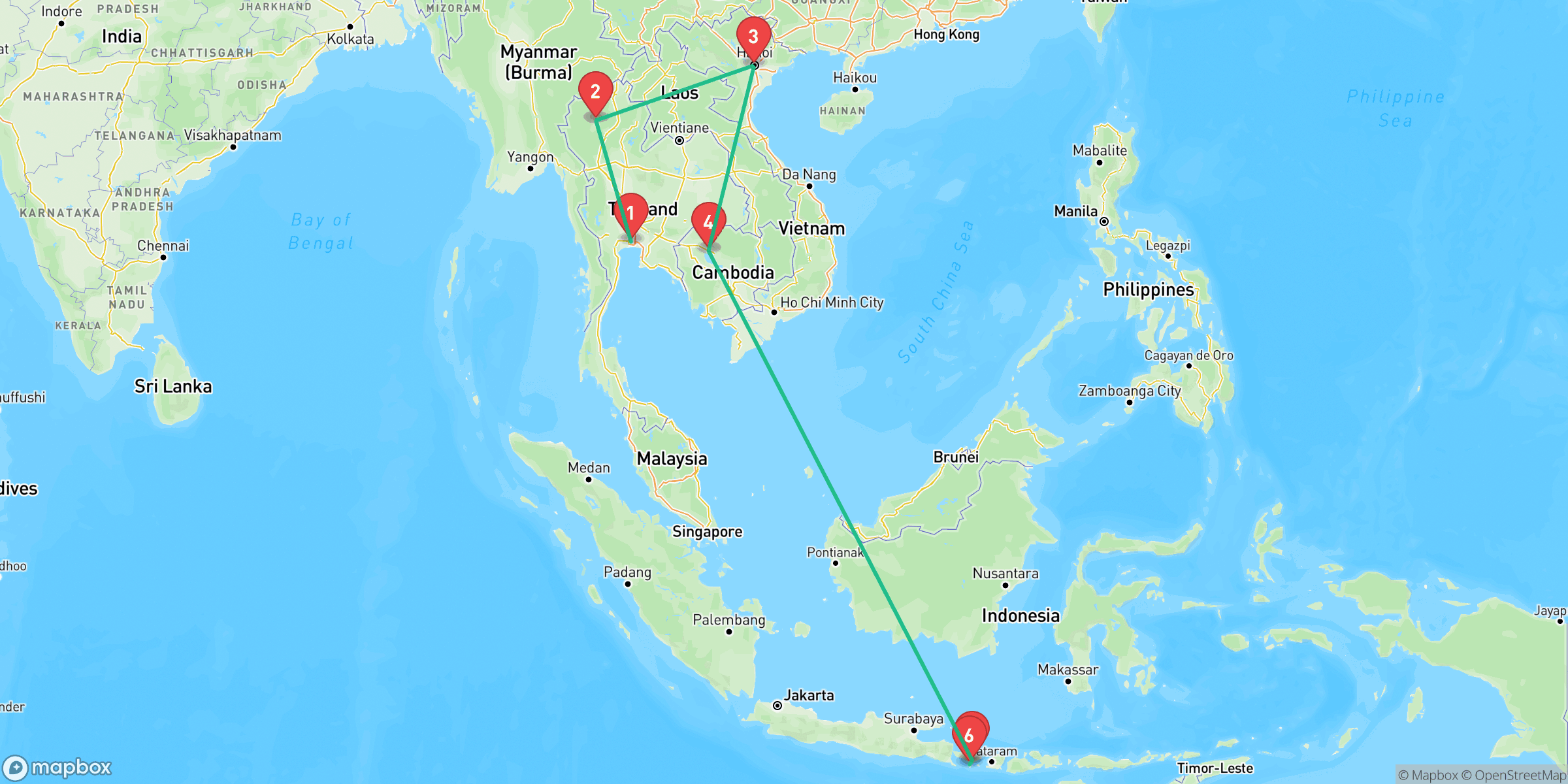
Southeast Asia in 3 Weeks
Bangkok to Bali — temples, rice terraces, and street food
Thailand in 2 Weeks: Temples, Jungles & Islands
Bangkok to Railay — street food, elephant sanctuaries, and turquoise coves